Winter Gems
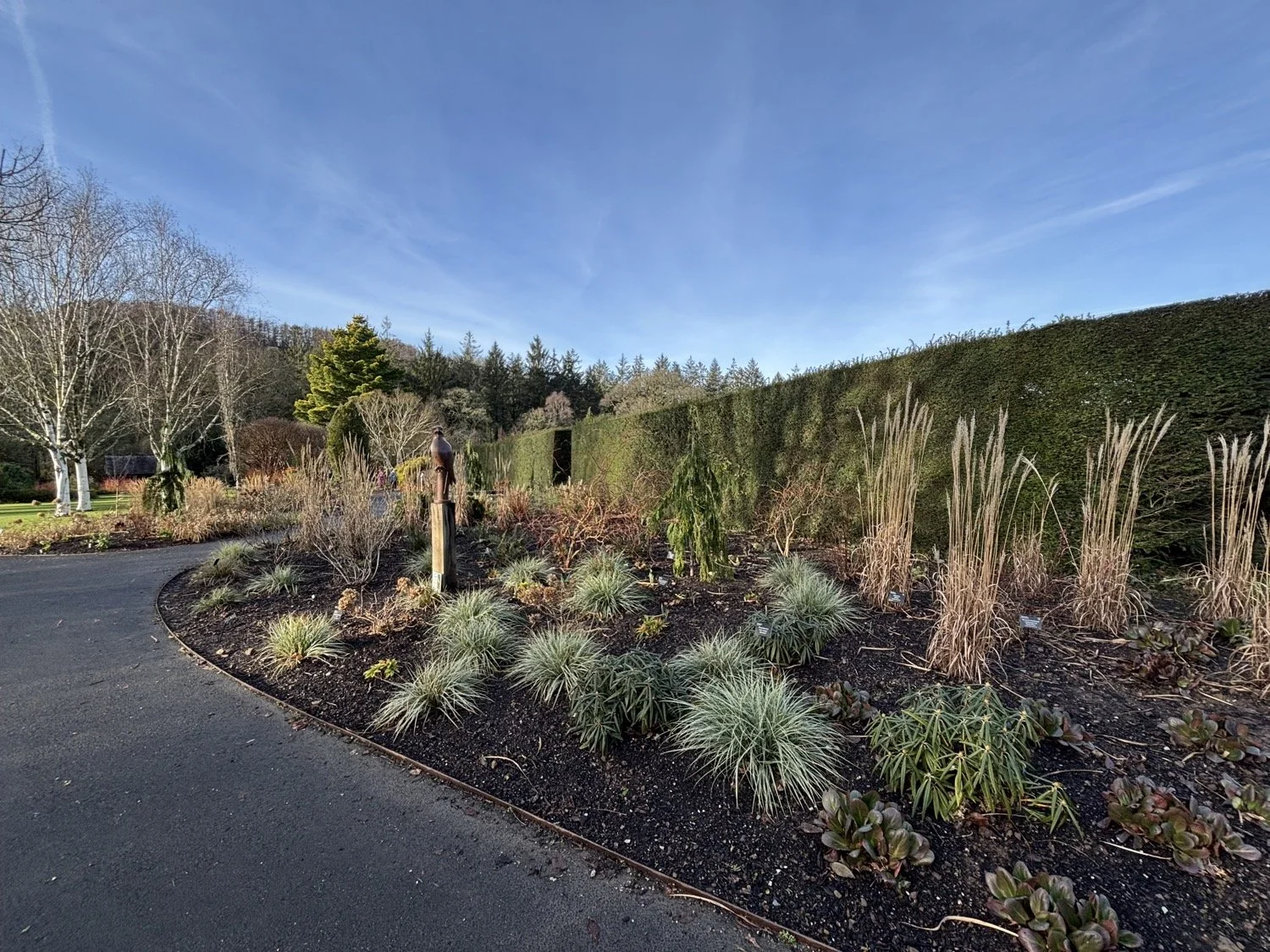
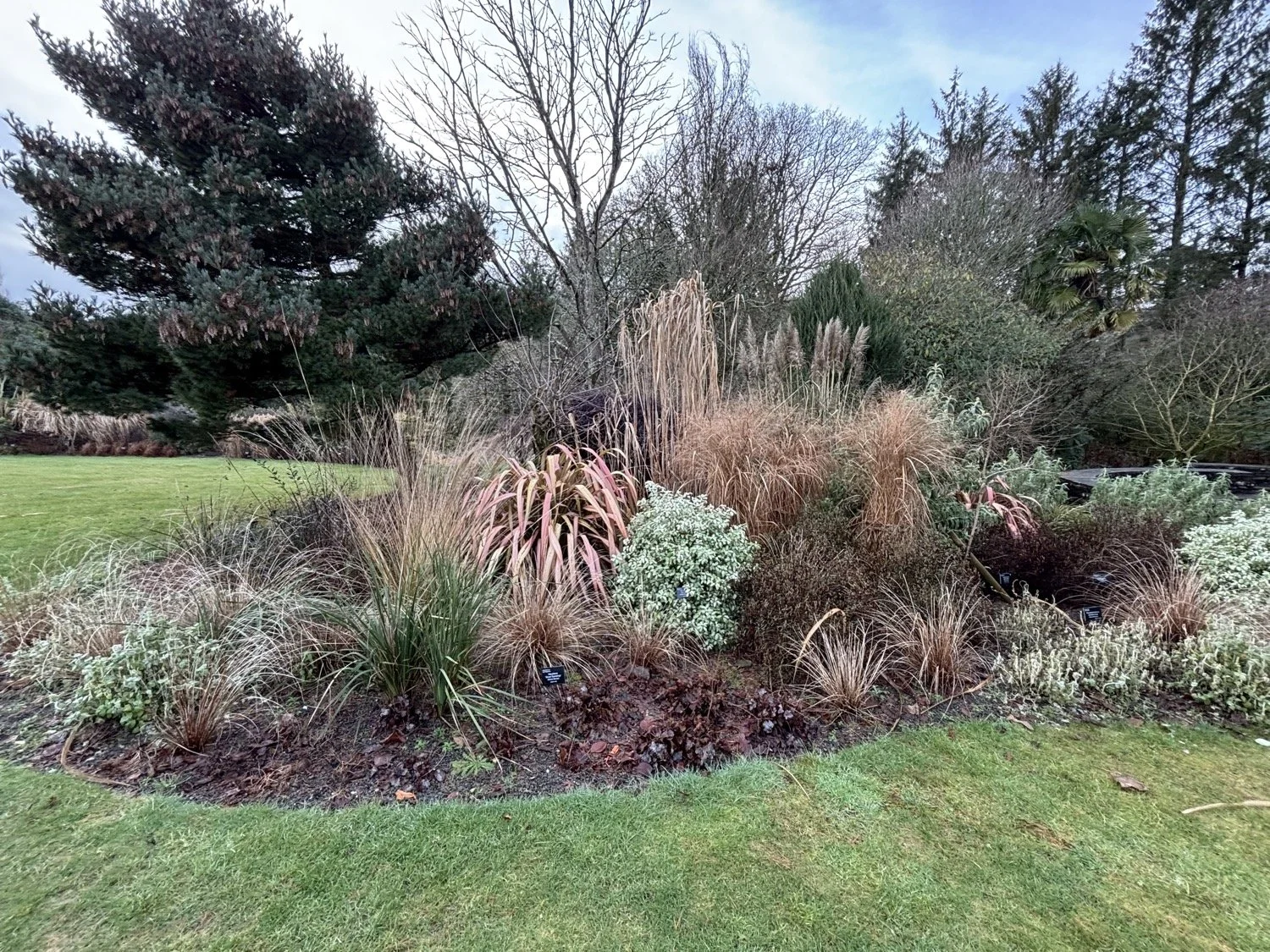
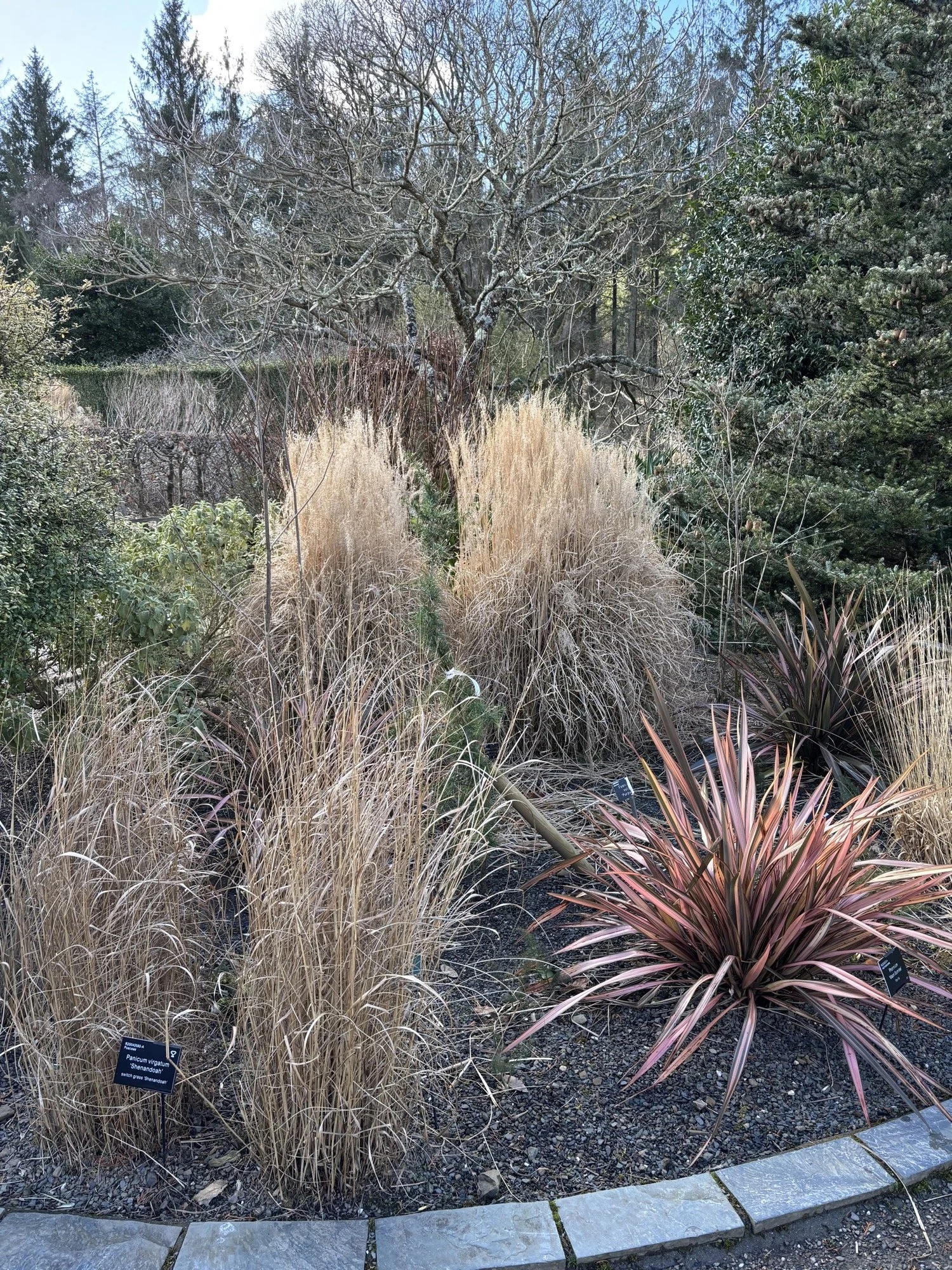
What do we look for when we visit a garden in the winter months? We all look for different things, of course, but for me a good winter garden needs strong structure, colour, scent, texture and contrast.
That last quality is especially important. Contrast can be a feature of any garden, but in winter it often seems sharper and more dramatic. Stripped back to its essentials, a garden reveals what really matters.
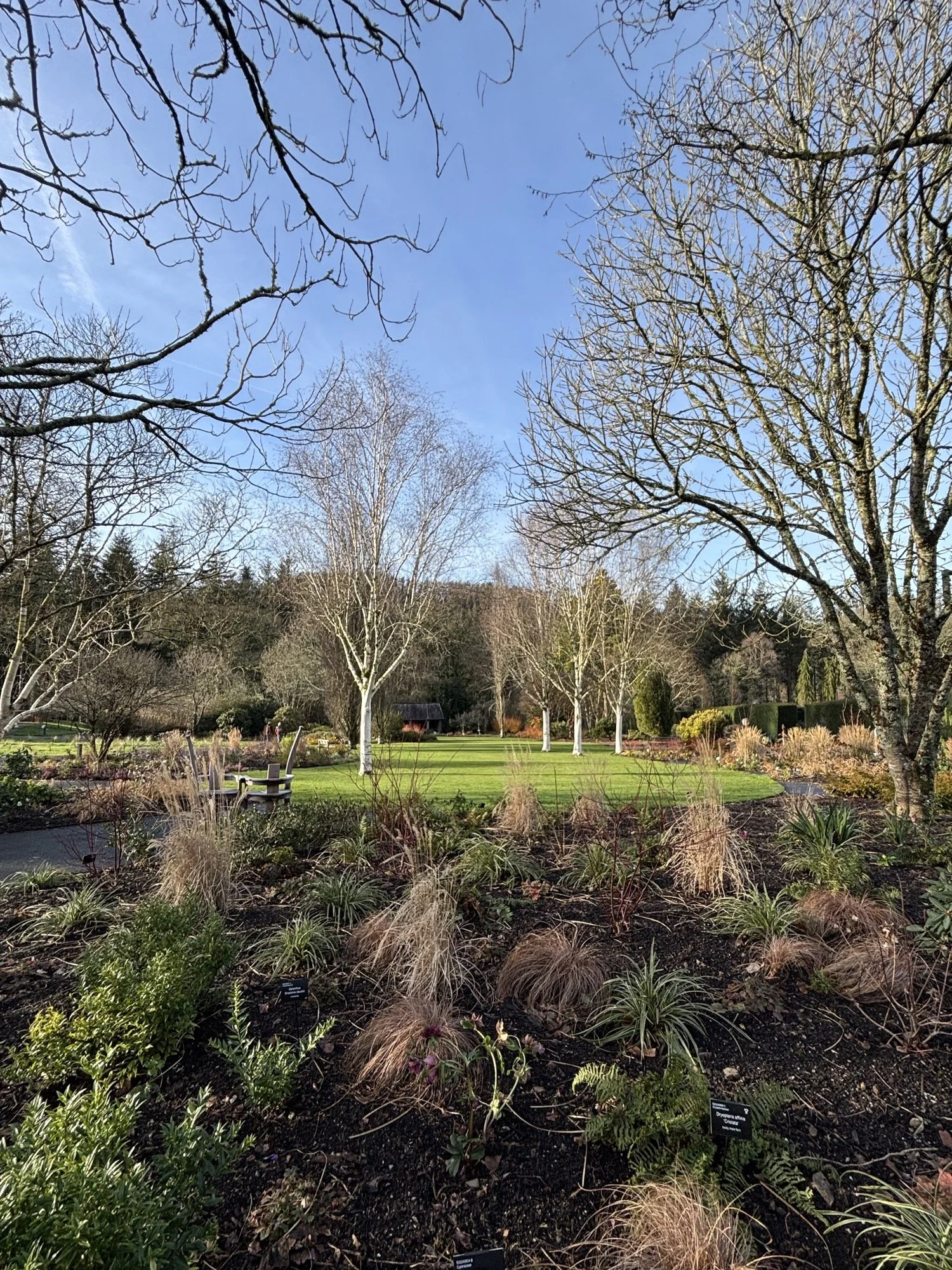
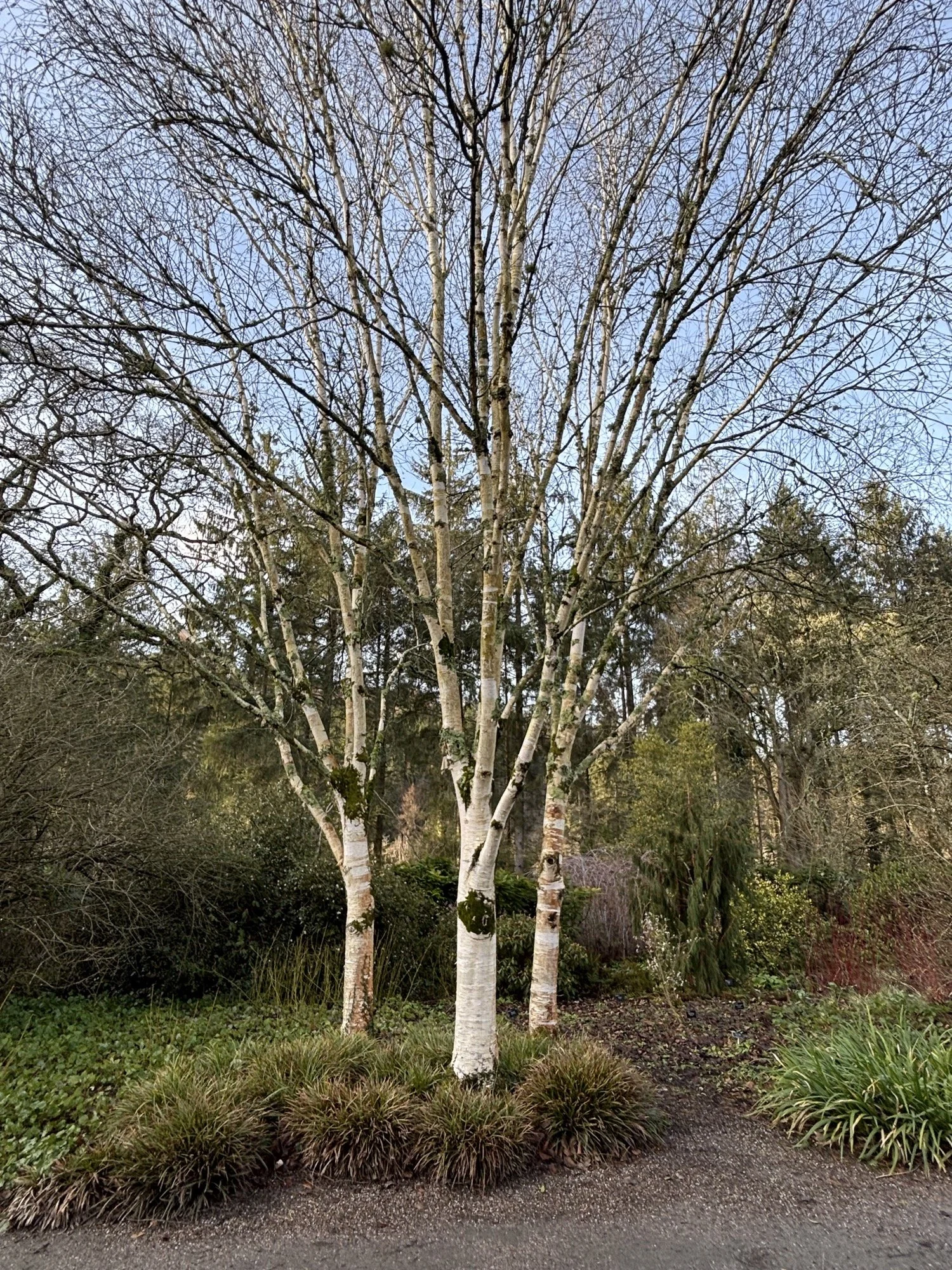
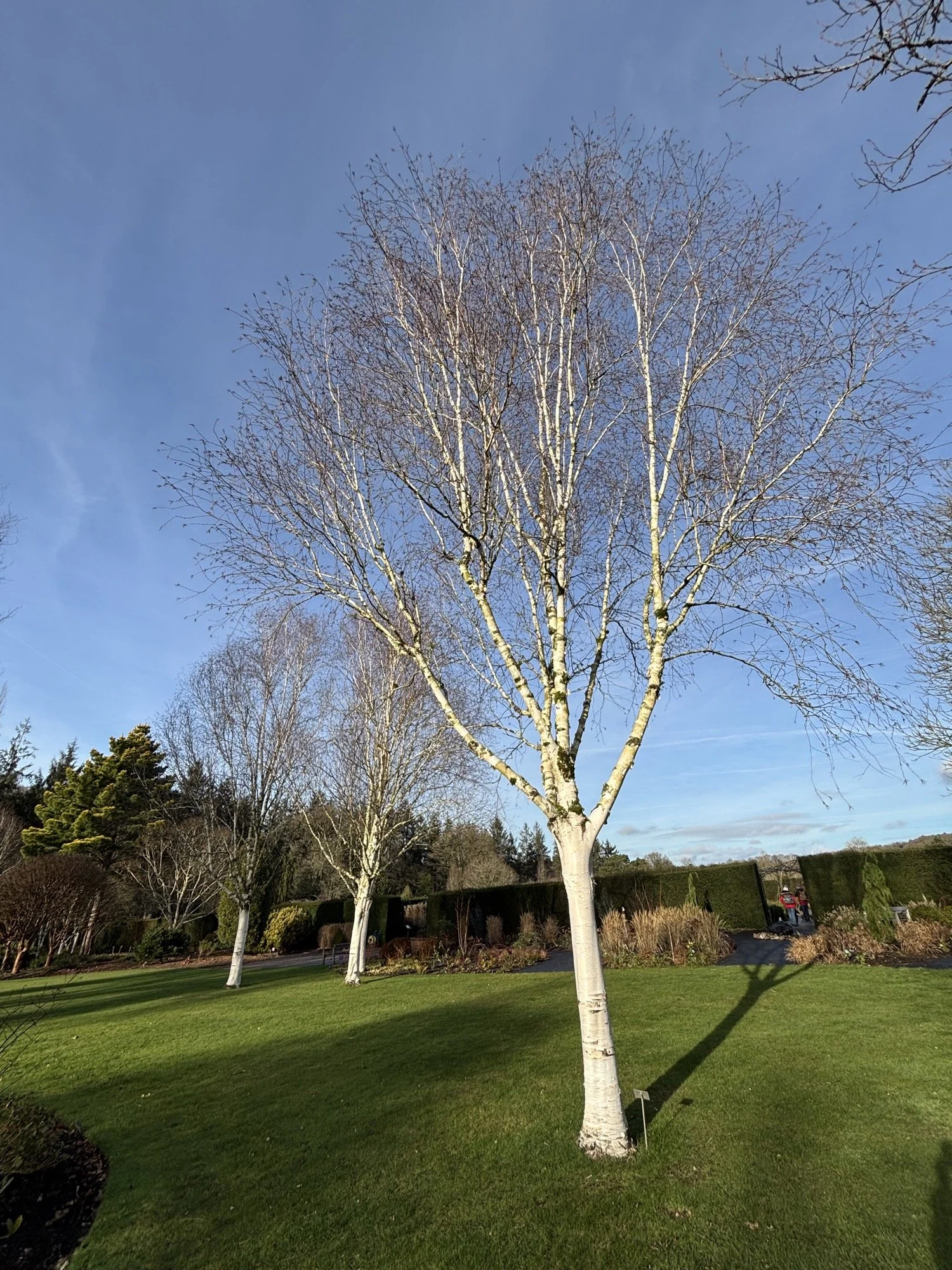
Take these silver birch at RHS Rosemoor. Several groups are planted around the winter garden, but these three, set against a bright lawn, are the ones that really catch the eye. Personally, I like silver birch better without their leaves. Here, with space around them, their beautiful white bark and feathery branching can be properly appreciated. They are among the true gems of the winter garden.
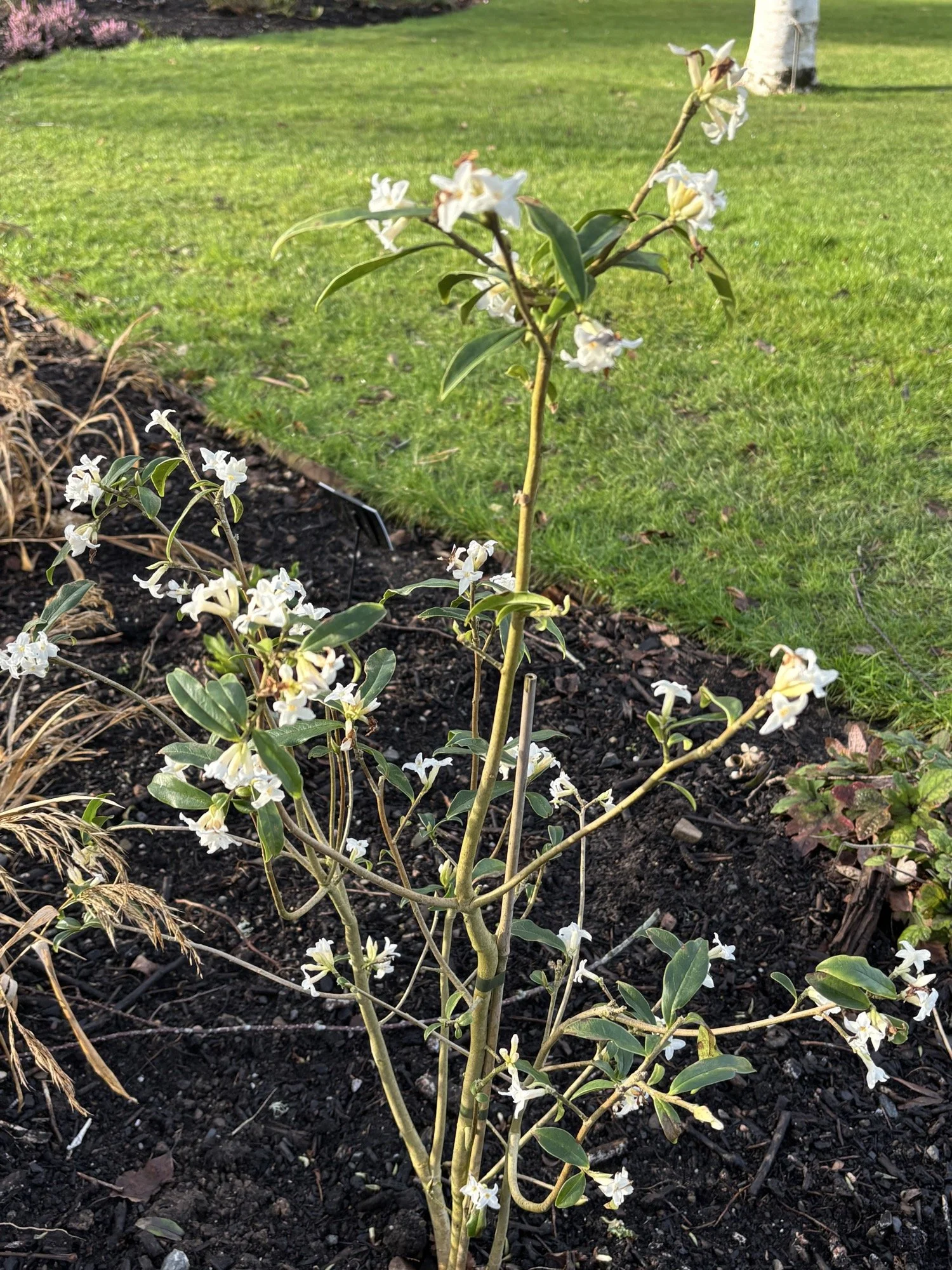
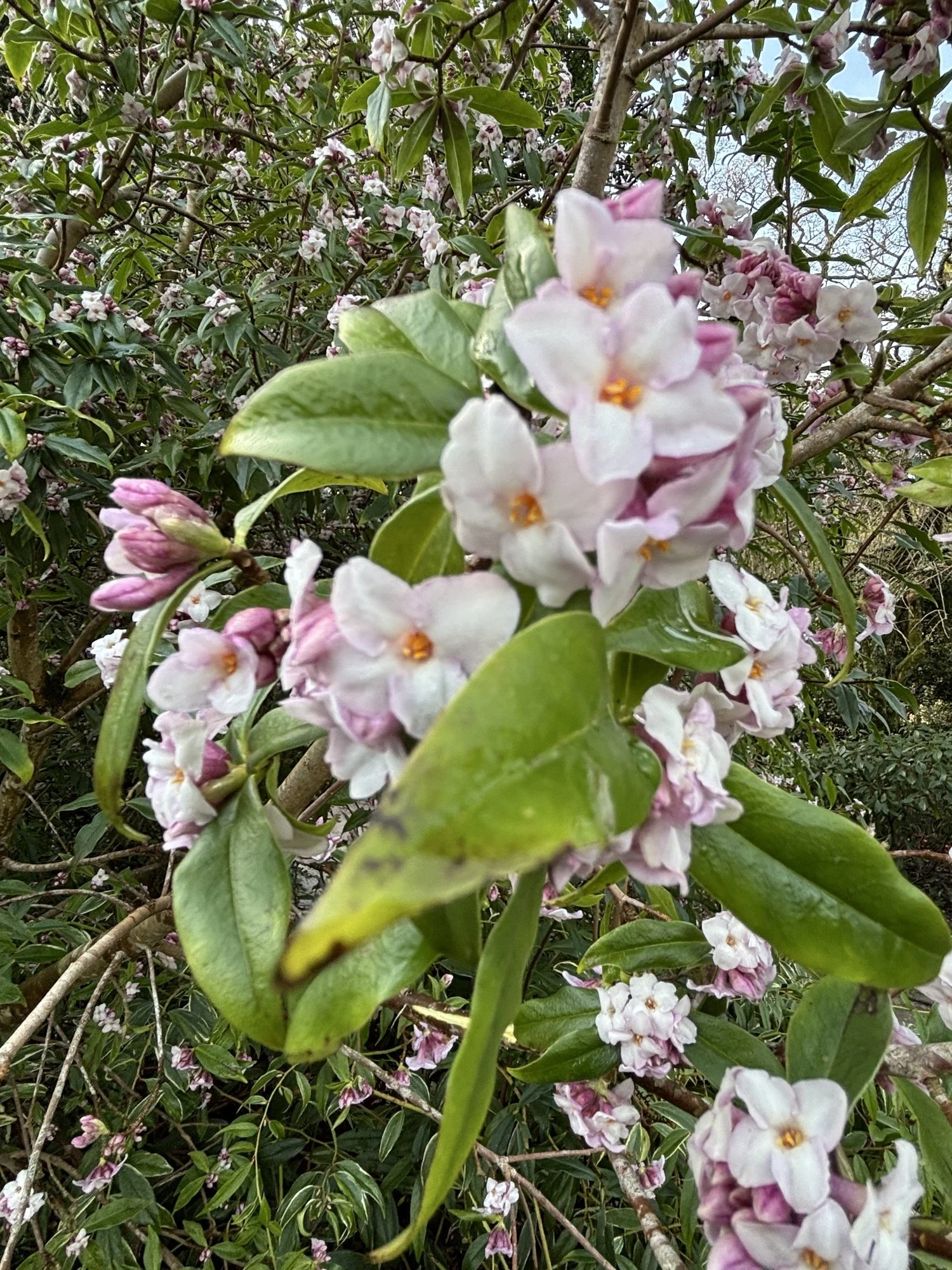
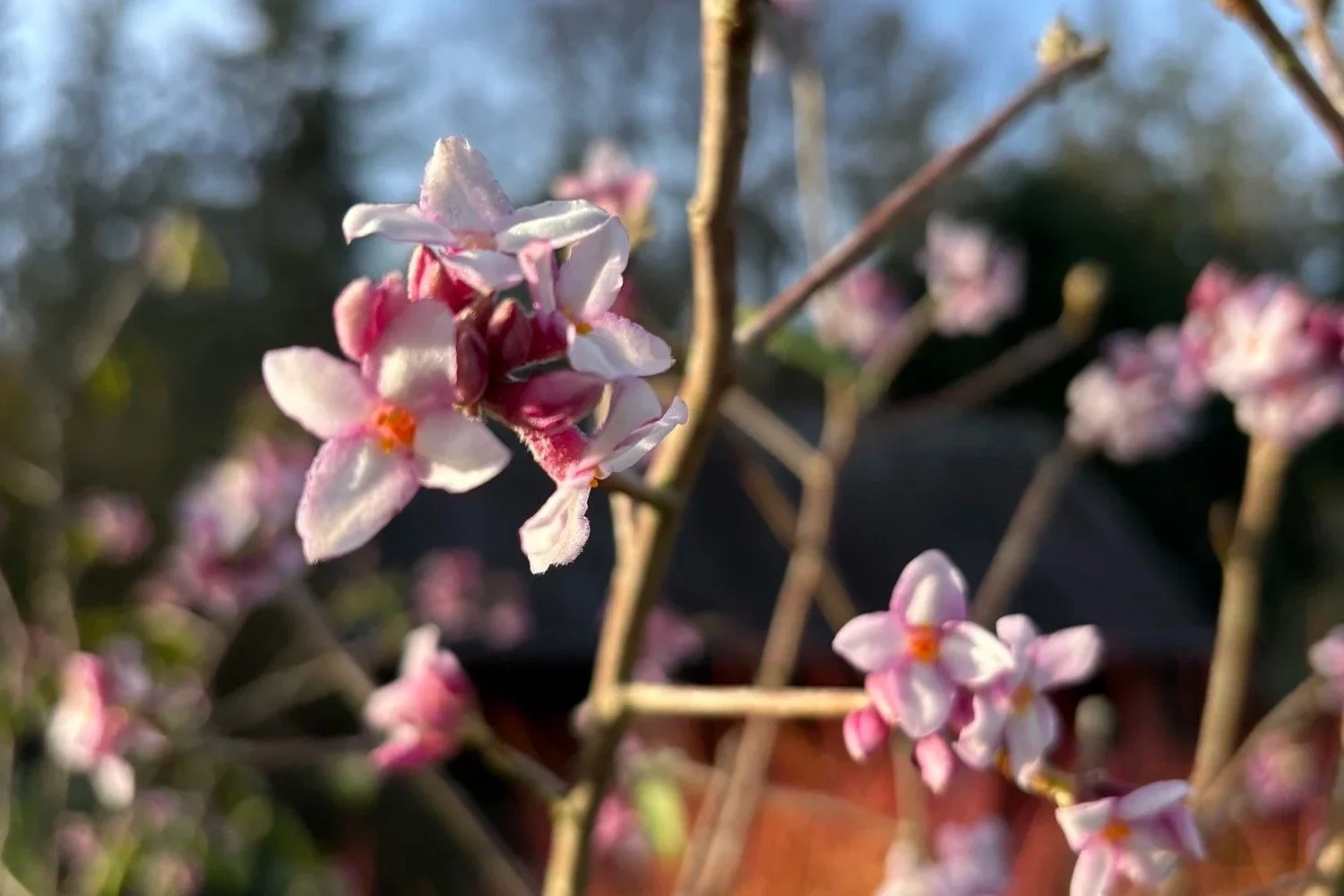
For scent, which I value at any time of year but especially in winter, it is hard to beat the daphnes. They announce themselves on the air long before they come into view. Their flowers are delicate, usually in shades of pale pink, and seem all the more precious for appearing in the coldest months.
Daphne bholua ‘Jacqueline Postill’ is one of the best and is widely available. Many daphnes are evergreen or semi-evergreen, with long, tapering glossy leaves, and different varieties flower from November to April, exactly when they are most needed.
RHS Wisley holds the only UK National Collection of Daphne, with 10 species and 30 cultivars. They are often described as resilient and tolerant plants, which makes me feel slightly guilty as the one I once had died. I suspect I failed on two counts: I did not give it the light woodland conditions it would have preferred and I had probably not appreciated quite how fragile daphne roots are when planting. It makes me admire them all the more when I see them thriving in other gardens.
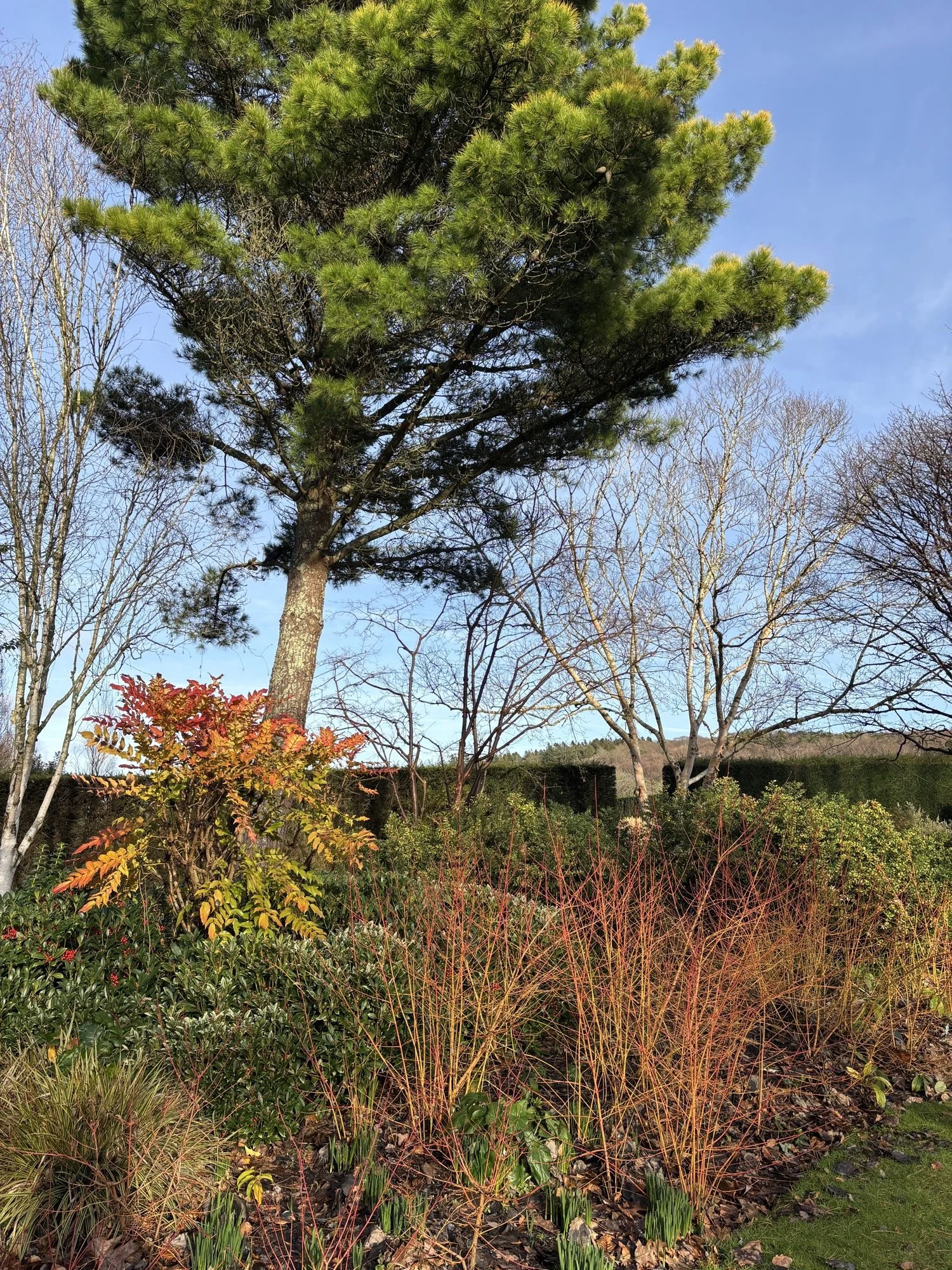
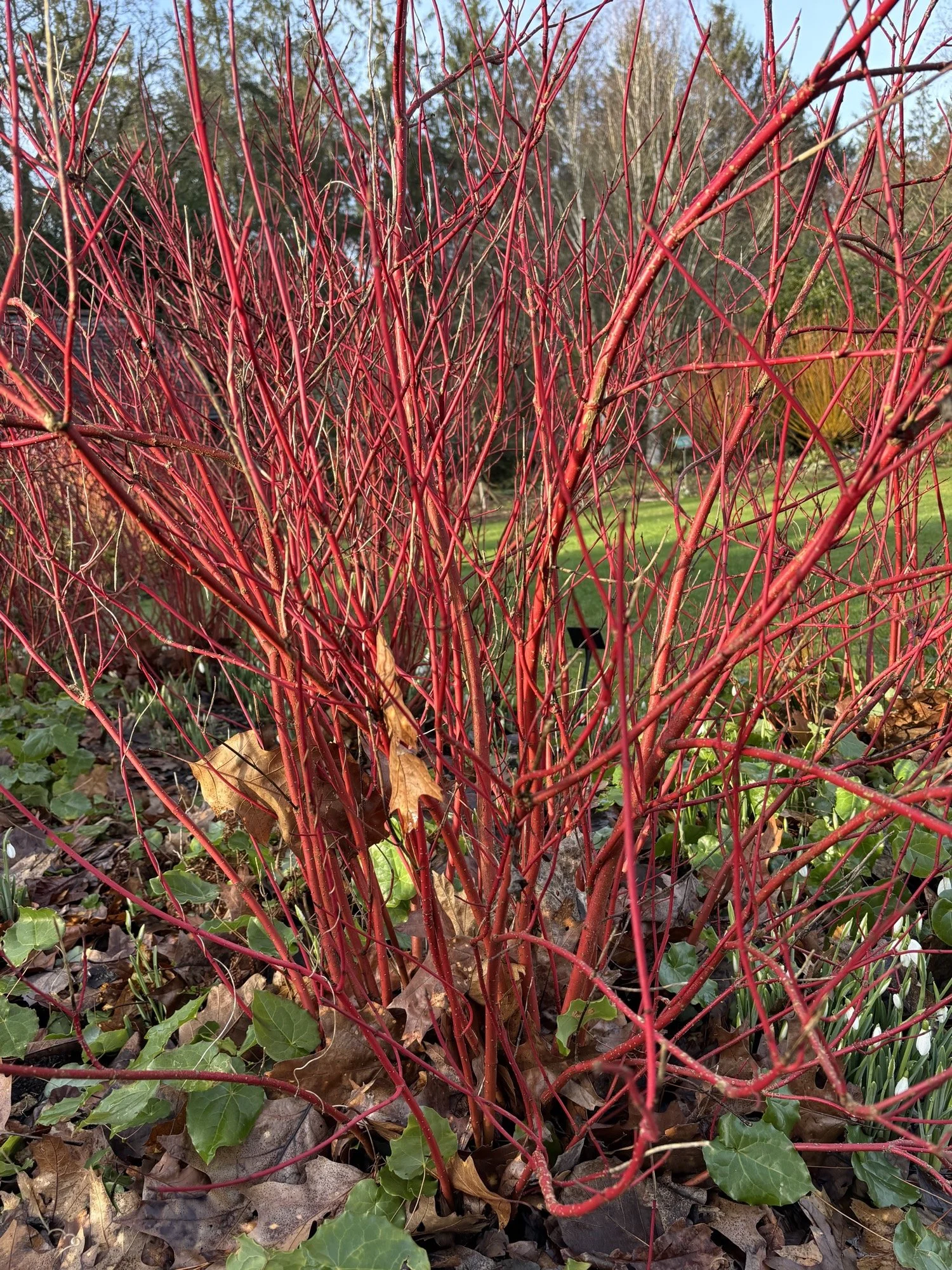
For colour, almost every gardener seems to choose at least one cornus, and it is not hard to see why. Their bright winter stems can look almost unreal on a sunny day. They also come in fiery yellows and oranges, but the reds are the ones I love most.
Cornus alba ‘Sibirica’ will sucker freely, eventually forming a vivid thicket of stems. As the leaves emerge on those crimson shoots, they are a fresh bright green, making a perfect contrast. Later, the foliage turns red in autumn. The flowers come in clusters, but they are small and, by then, there is so much else competing for attention that they can easily go unnoticed.
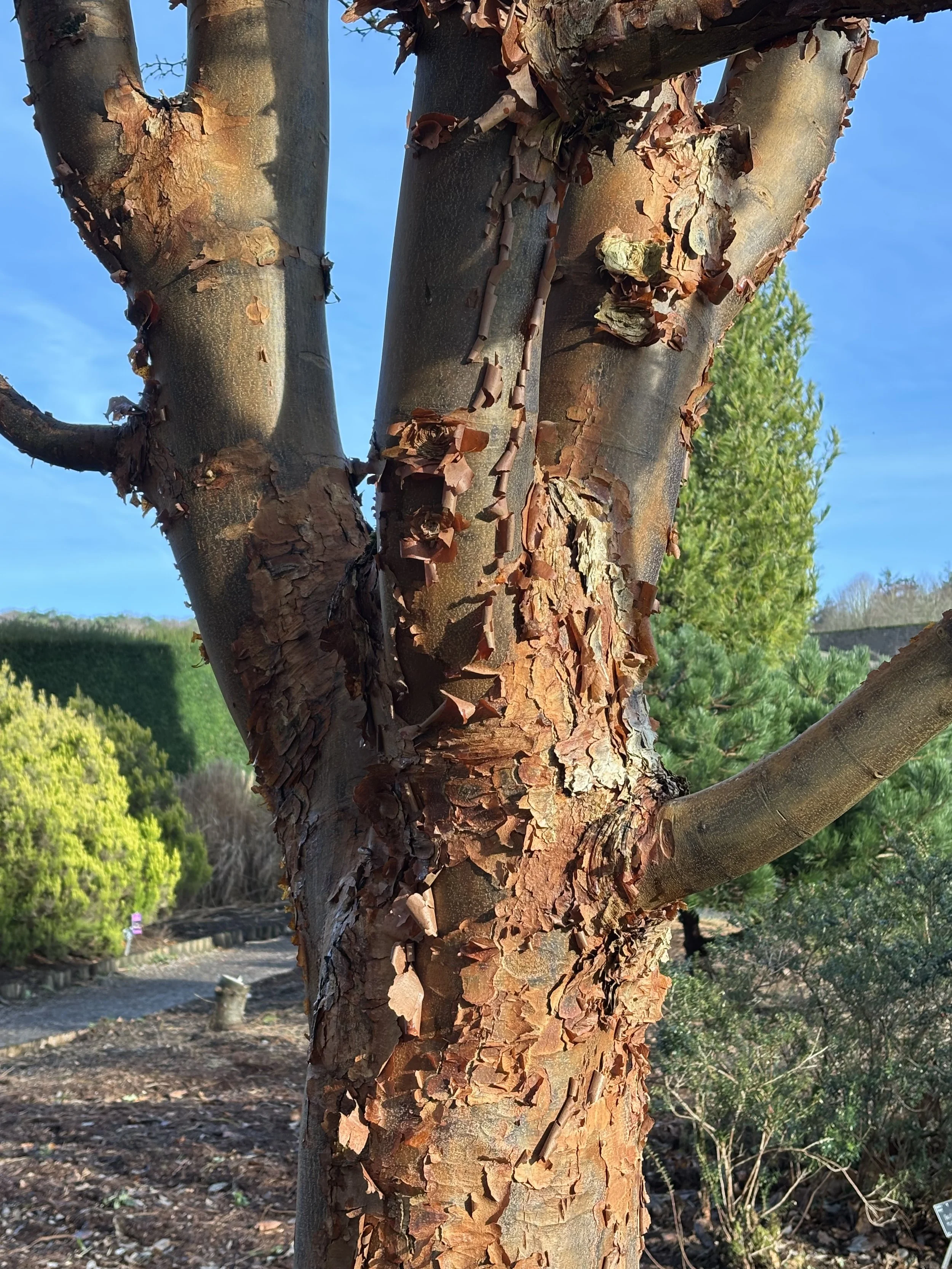
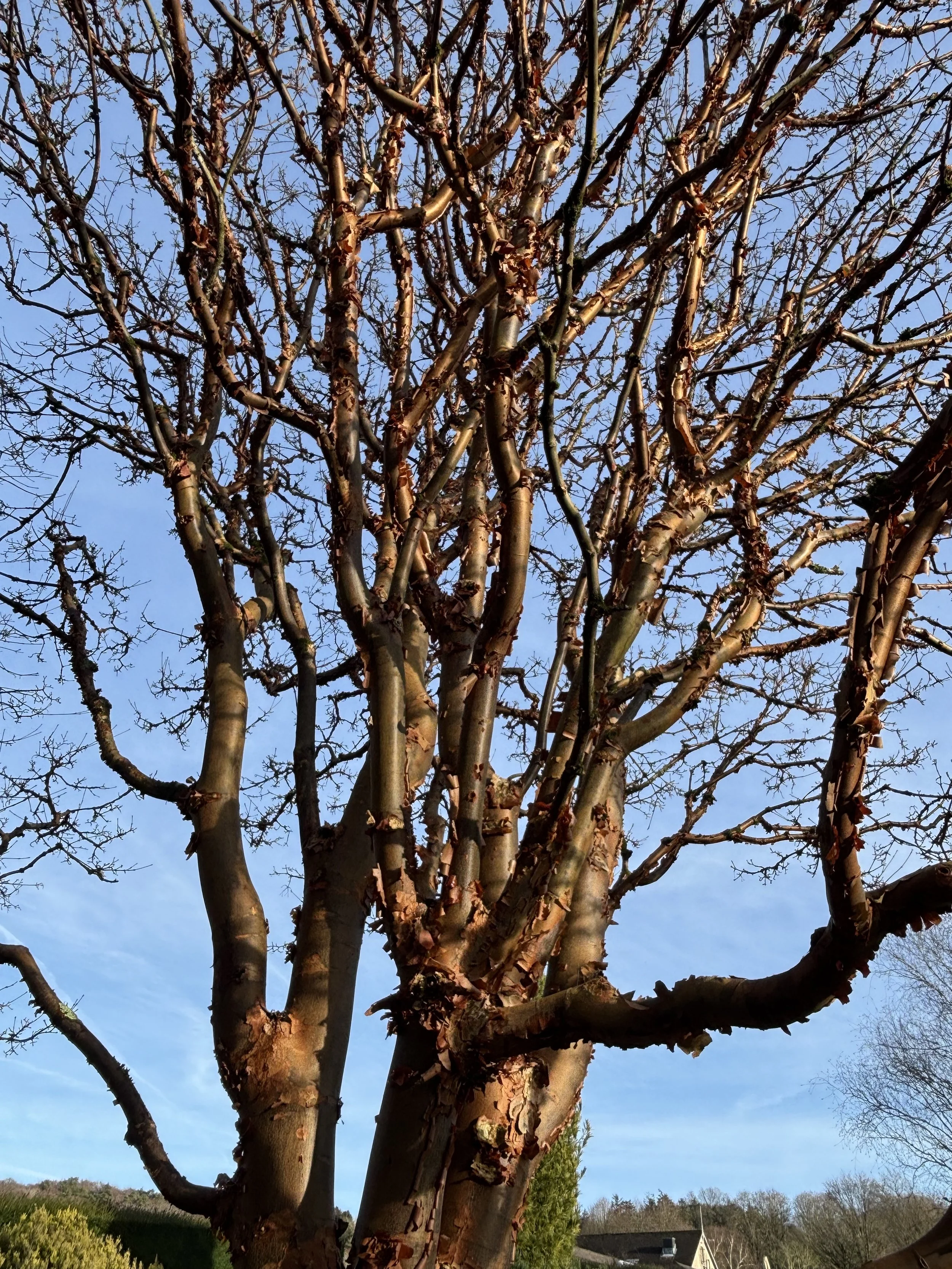
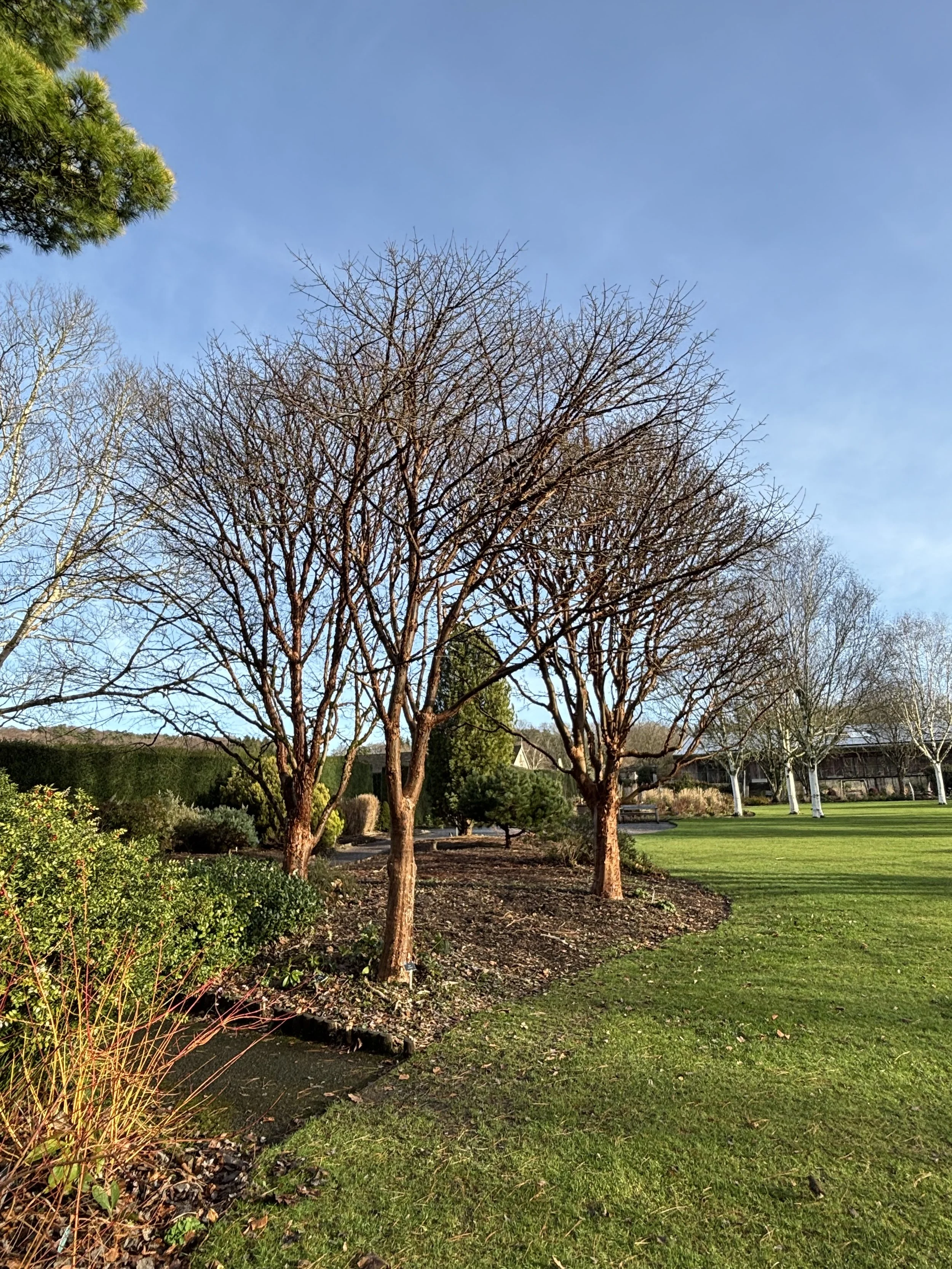
For both colour and texture, it is hard to beat Acer griseum, the paperbark maple. Once again, winter is arguably its finest season, when the bare branches allow the whole tree to glow like burnished copper. Its peeling bark is one of the great pleasures of the season, before the leaves later turn brilliant red in autumn.
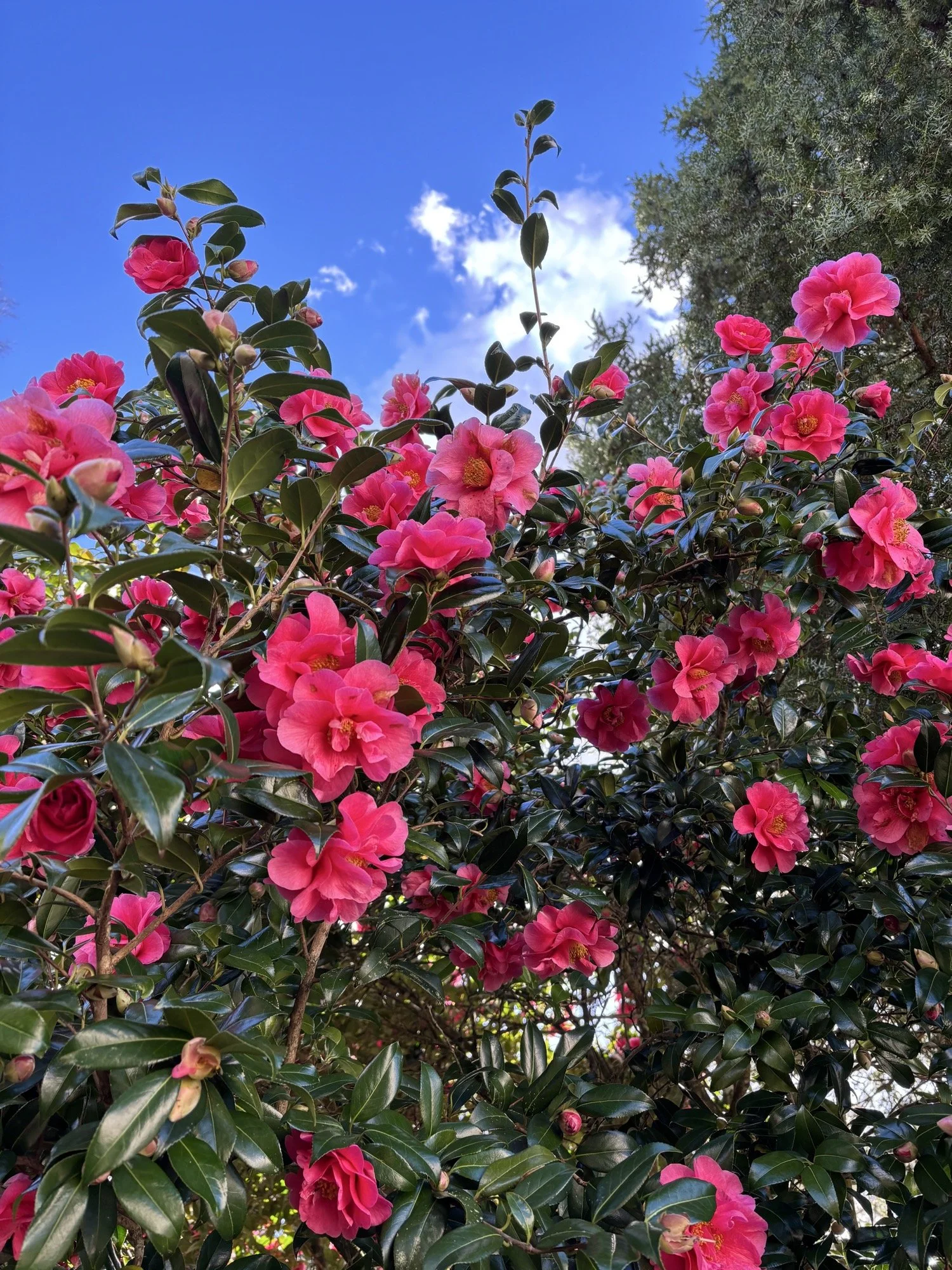
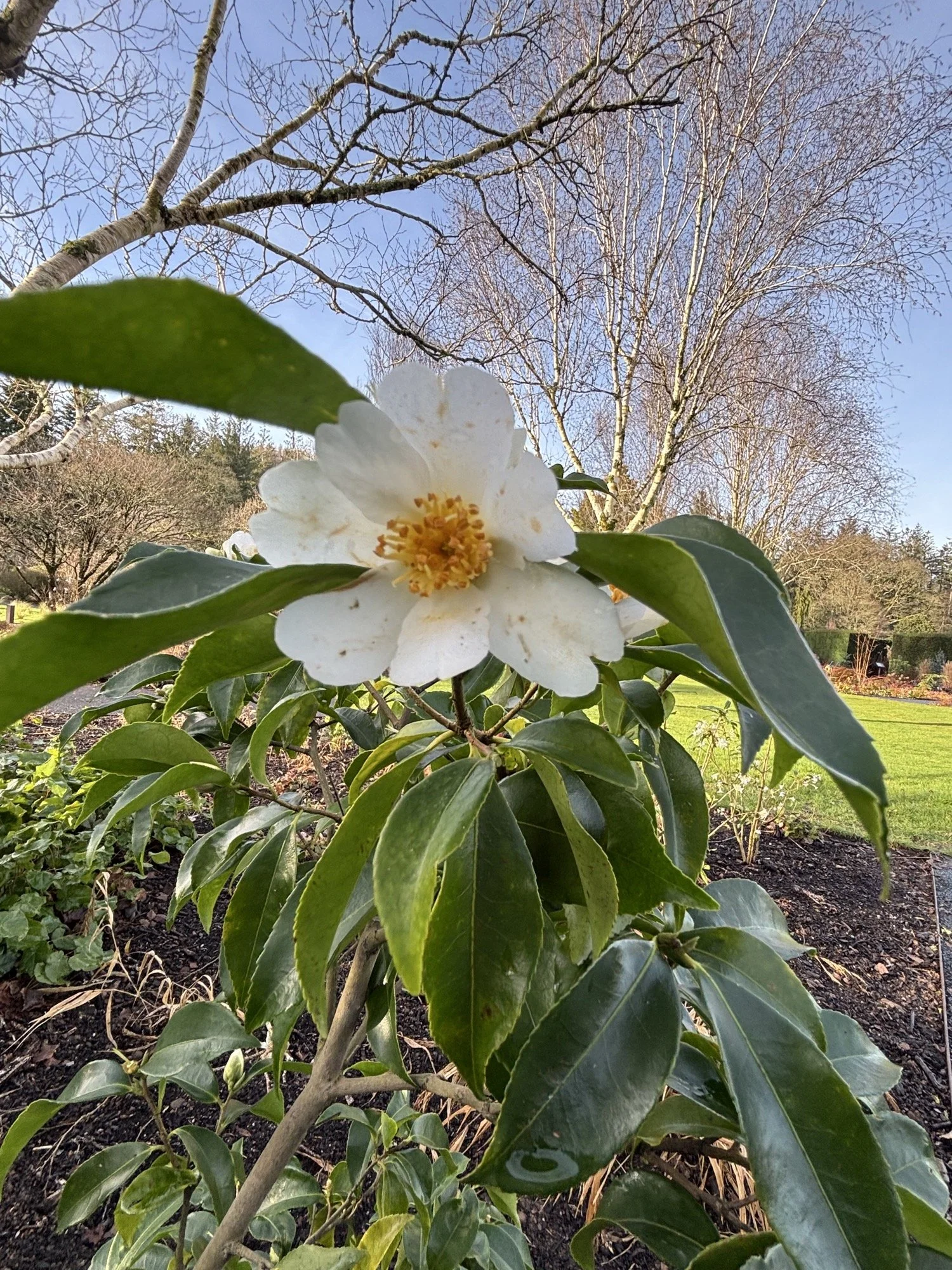
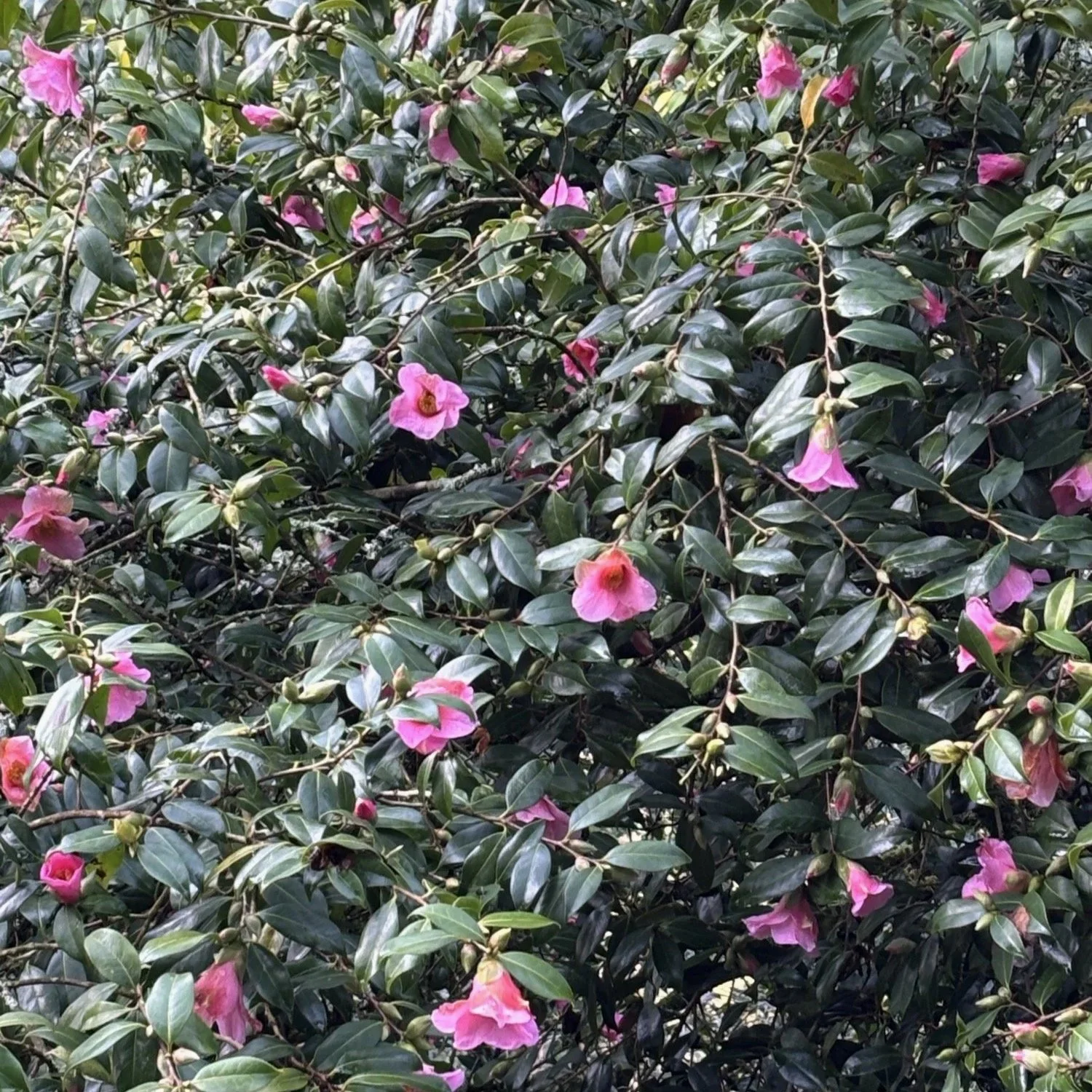
Another winter classic is the camellia. There seems to be a camellia for almost every season, but those that flower in winter and early spring are especially welcome. In the West Country, and particularly in Cornwall, they always seem to signal that spring is edging closer.
This one is Camellia x williamsii ‘Bow Bells’, with lovely deep pink, bell-shaped flowers. Camellias are evergreen and often have dark, glossy leaves, but when they flower well the blooms can almost conceal the foliage. For all their beauty, they are not without their vulnerabilities: cold winds and sharp frosts can damage the flowers and buds in an instant.
Mahonia may not a be personal favourite but many people love it and it certainly earns its place in winter for both structure and scent. Evergreen shrubs and grasses are valuable too, especially where grasses bring movement and shrubs offer berries.
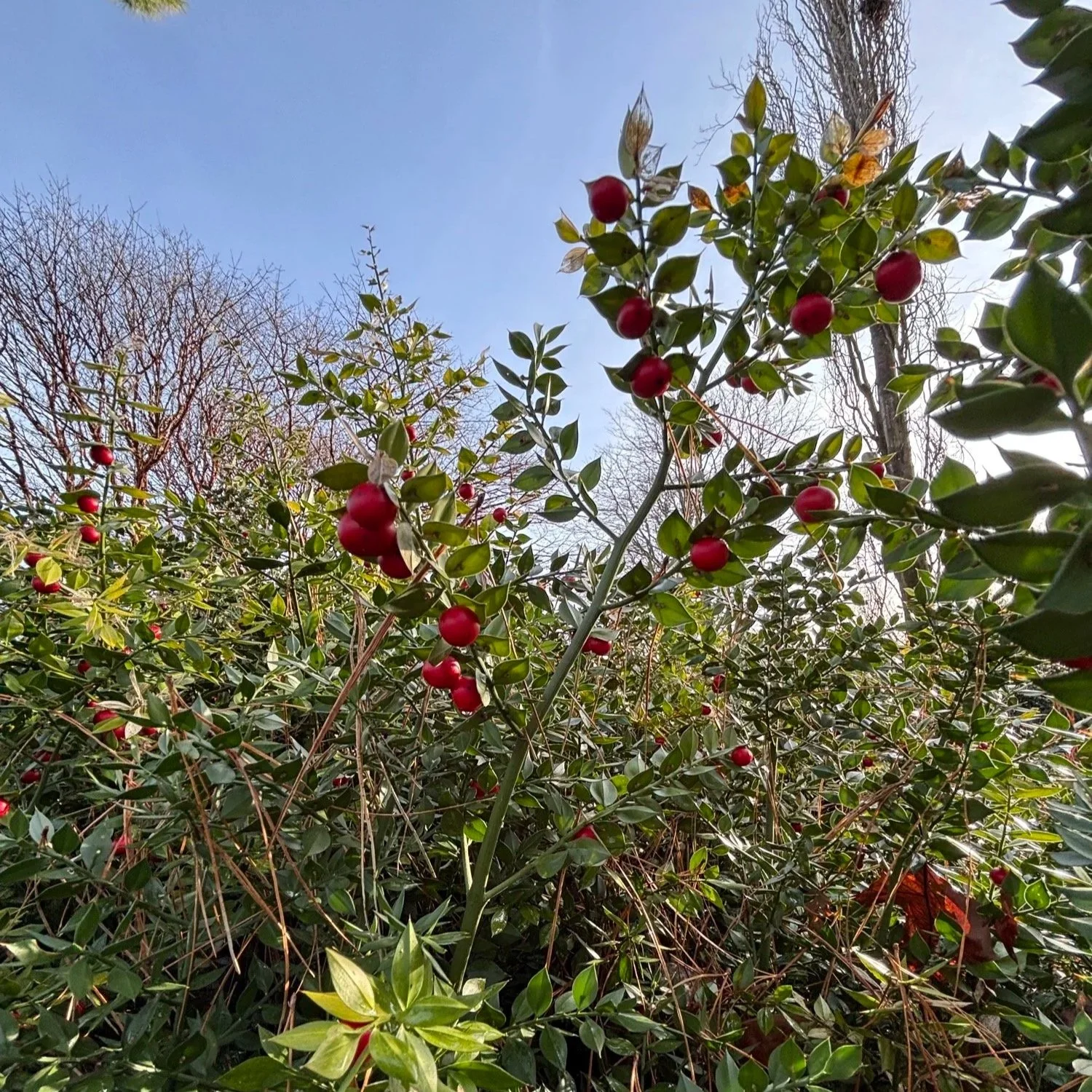
This Ruscus is a good example. Only the female plants bear berries, though some forms are hermaphrodite and can produce berries from both male and female flowers. Ruscus aculeatus is native to England and was once used by butchers to sweep their chopping blocks, which gives us the common name butcher’s broom. Rosemoor holds the National Collection of Ruscus.
Not quite a gem perhaps, but I am always glad to see honesty. Its papery, translucent seedheads have endured everything winter has thrown at them and now wait for the right moment to split and begin the cycle again.
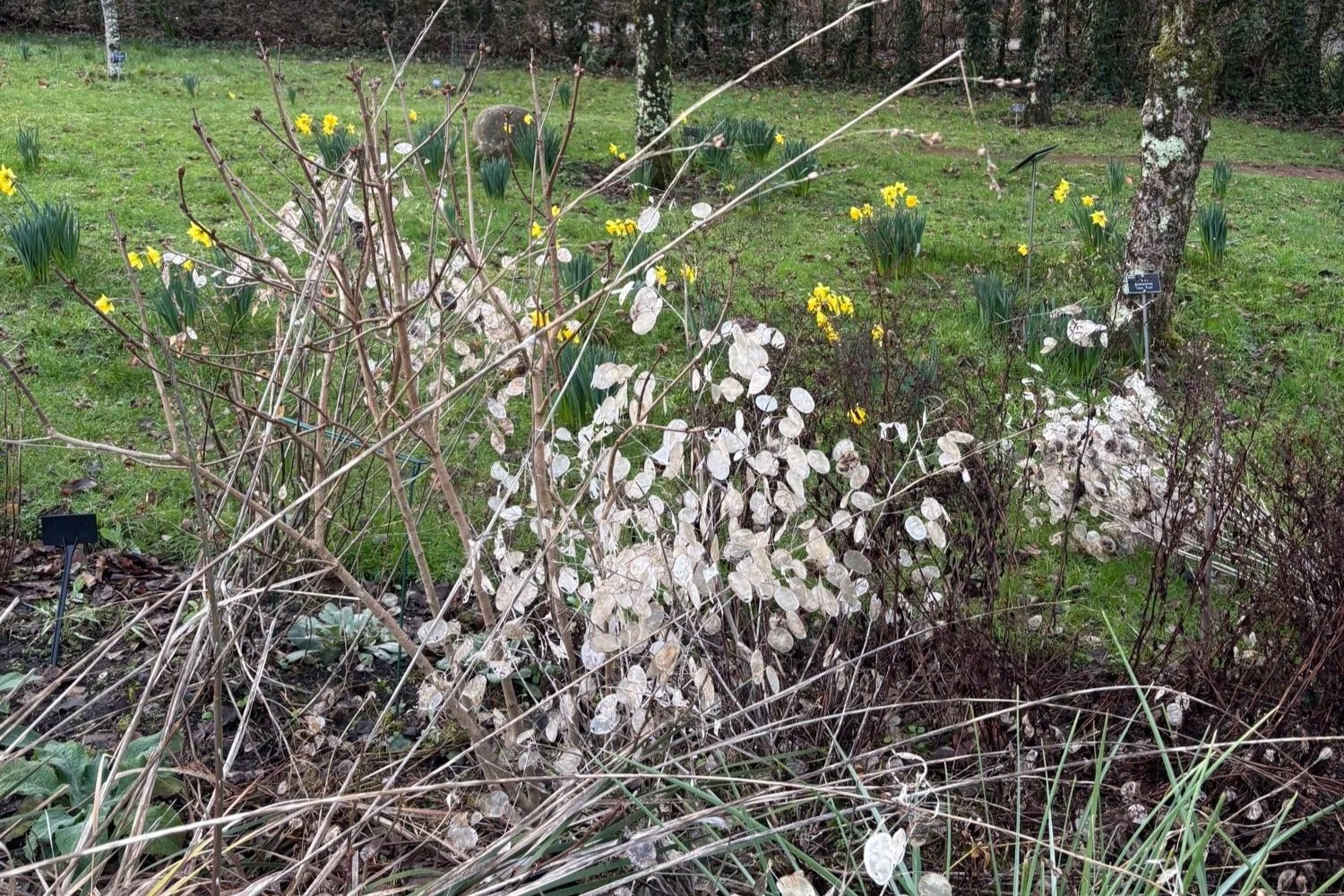
Nothing in it hints at the vivid purple flowers of summer, and perhaps that is part of the magic of a winter garden.